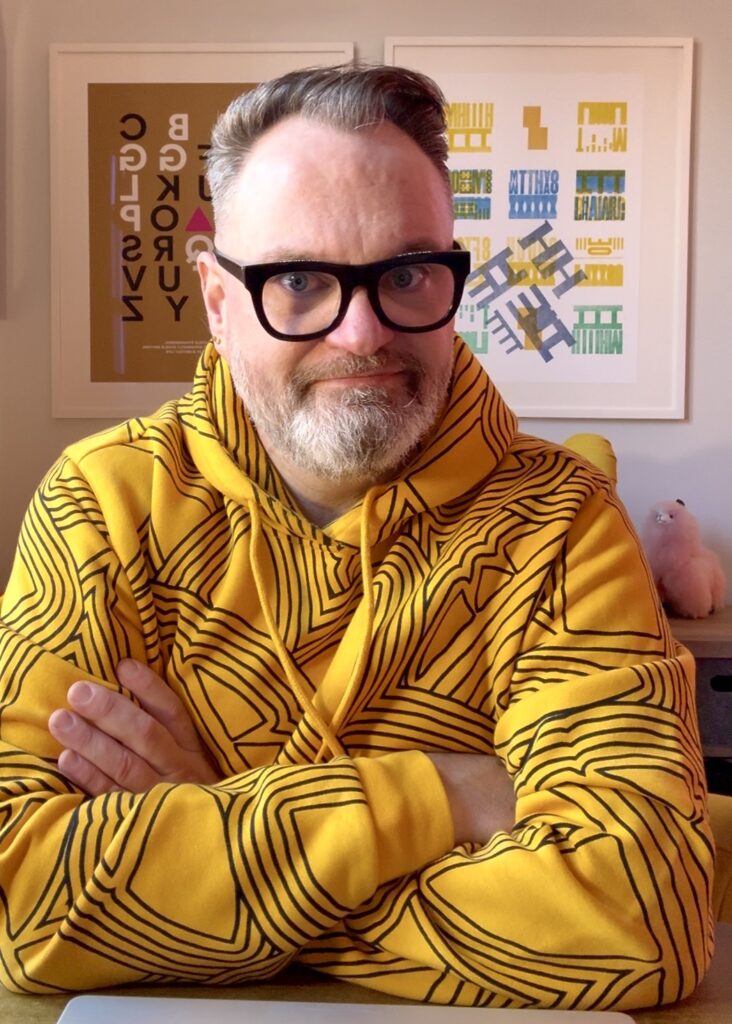
Gonzalo Casals (he/him/el) is an educator, cultural producer, and policymaker based in Jackson Heights, Queens, whose work spans public institutions, civil society, and government.
His cross-sector work—across public service, philanthropy, nonprofit institutions, and the classroom—is grounded in advocacy, community organizing, and popular education. He bridges grassroots organizing with civic systems and institutional reform, translating community priorities into policy, programs, and structural change that reimagine culture as public infrastructure.
He is the founding director of the Culture & Arts Policy Institute, which he co-leads with Mauricio Delfín. The Institute advances equity-driven cultural policy in New York City and beyond by developing collective strategies that strengthen civic capacity and position culture as a force for belonging and justice.
Previously, Casals served as Commissioner of the NYC Department of Cultural Affairs (2020–2021), where he directed cultural policy for the City of New York and led the creative sector’s recovery during the COVID-19 pandemic. During this period, the agency oversaw a historic $250 million annual investment supporting more than 1,300 nonprofit organizations and launched a landmark $25 million program serving over 3,000 working artists.
Prior to his mayoral appointment, Casals held executive roles at the Leslie-Lohman Museum (2017–2020), Friends of the High Line (2013–2017), and El Museo del Barrio (2006–2013), where he helped guide each institution through periods of transformation grounded in equity, participation, and community engagement. He also helped craft CreateNYC (2017), the city’s first cultural plan, and served on the Mayoral Advisory Commission on City Art, Monuments, and Markers (2019).
A frequent speaker and writer on cultural democracy and systems change, Casals teaches Cultural Policy and Advocacy at CUNY, NYU, Yale, and Columbia. He lives in Jackson Heights, Queens, where he remains deeply engaged in civic life—and now shares his home with Jennie, a chubby former bodega cat with firm opinions about breakfast time.